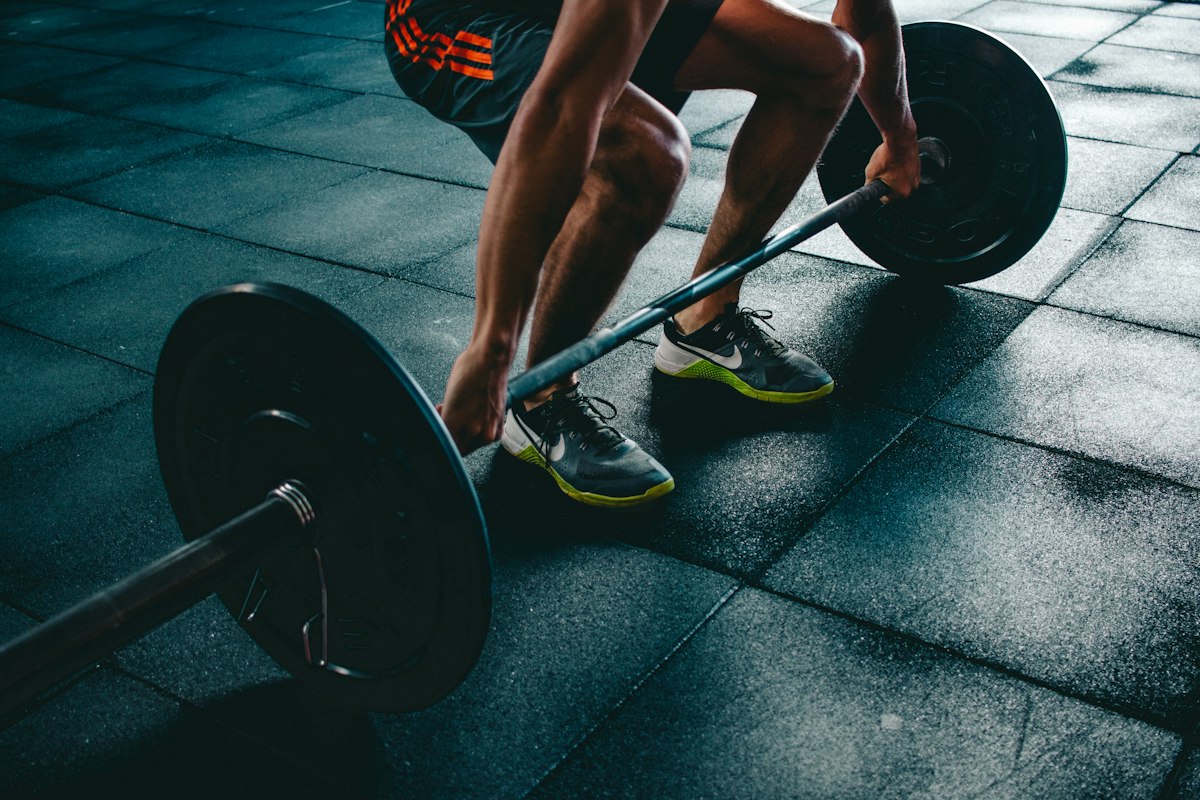
Why You Must Lift Weights While Losing Weight (Or Lose 20% Muscle)
The Dirty Secret of Diet-Only Weight Loss
Every pound you lose on a diet feels like a win. But here's the brutal truth: if you're not lifting weights, a significant chunk of that "weight" isn't fat—it's your own muscle. And losing muscle while dieting is the fastest way to slow your metabolism, guarantee weight regain, and end up smaller but metabolically weaker than when you started.
The widely accepted research rule is this: approximately 25% of weight lost through diet alone comes from fat-free mass (FFM)—mostly muscle. Some studies push that figure even higher. A 12-week controlled trial found that participants who dieted without any exercise lost 7 pounds of muscle alongside 14 pounds of fat, while those who added a lifting routine lost zero muscle and actually lost more fat. cambridge
This isn't a minor rounding error. It's a body composition catastrophe hiding behind a lower number on the scale.
*
The 25% Rule: What Science Actually Says About Muscle Loss on Diets
The scientific literature is consistent and damning for diet-only approaches:
- In individuals with overweight or obesity, fat-free mass contributes approximately 20–30% to total weight loss on calorie-restricted diets without exercise. pmc.ncbi.nlm.nih
- A study in postmenopausal women found 32–34% of total weight lost was lean mass across all groups, regardless of whether they added low or high-intensity aerobic exercise. pmc.ncbi.nlm.nih
- The "one-fourth rule" — that roughly 25% of weight loss is lean mass — has been replicated across three large independent studies. pmc.ncbi.nlm.nih
- For people on very rapid weight loss (crash diets), lean mass losses can run even higher, with RMR (resting metabolic rate) dropping out of proportion to the weight lost. pmc.ncbi.nlm.nih
In plain terms: lose 40 lb without lifting, expect to lose 8–13 lb of muscle alongside the fat. foxhoundstudio
*
A 2026 Study Just Made This Crystal Clear
A landmark study published in January 2026 directly compared three groups during caloric restriction: resistance training (RT), aerobic exercise (AR), and no exercise (NO). pmc.ncbi.nlm.nih
Key results:
- 85% of RT participants gained FFM; none lost more than 15% of their lean mass. pmc.ncbi.nlm.nih
- 50% of aerobic-only participants lost FFM. pmc.ncbi.nlm.nih
- Total weight loss was similar across all groups—only the composition of that loss differed. pmc.ncbi.nlm.nih
The researchers concluded: "RT is the most effective strategy for preserving FFM and improving body composition during weight loss." pmc.ncbi.nlm.nih
*
What Happens When You Lose Muscle (Beyond the Scale)
Muscle isn't just about looking good. Losing it during weight loss sets off a cascade of metabolic and physiological problems: lerner.ccf
1. Your Metabolism Slows Down
Losing muscle lowers your resting metabolic rate (RMR). The metabolism doesn't grind to a halt—but combined with metabolic adaptation from calorie restriction, even modest muscle loss contributes to the dreaded weight-loss plateau and makes maintaining results harder. newsnetwork.mayoclinic
2. Fat Regain Becomes Inevitable
More loss of lean mass is associated with more weight regain. A University of Leicester study of 622 adults found that people who lost and then regained weight: pmc.ncbi.nlm.nih
- Regained all their fat mass
- But lost 1.5 kg of fat-free mass permanently
- Professor Tom Yates described this as equivalent to "about a decade of aging" in muscle terms. leicesterbrc.nihr.ac
This is weight cycling at its most brutal: each diet-regain cycle leaves you with less muscle and more fat than before—even at the same scale weight. le.ac
3. Inflammation Overtakes Muscle
Cleveland Clinic researchers found that as muscle disappears: lerner.ccf
- Muscle burns more calories than fat—losing it hands the metabolic advantage to fat tissue.
- Fat acts as an inflammatory organ; when muscle is replaced by fat, systemic inflammation increases.
- Fat can infiltrate muscle tissue (since fat and muscle share the same stem cell origin), creating muscles that look intact but are filled with fat and offer no strength or metabolic benefit. lerner.ccf
4. Function, Strength, and Longevity Take a Hit
Muscle isn't just cosmetic—it's functional. Sarcopenia (muscle loss) is independently associated with: uclahealth
- Increased mortality risk
- Loss of physical independence
- Higher risk of frailty, falls, and disability in older adults
UCLA Health has specifically warned that rapid weight loss—including from GLP-1 medications like Ozempic—risks sarcopenia, and the prescription is the same: resistance training + protein. uclahealth
*
Resistance Training vs. Cardio vs. Nothing: The Real Comparison
A controlled 12-week study clearly illustrates what happens with each approach when dieting: foxhoundstudio
| Approach | Fat Lost | Muscle Lost | Total Weight Lost |
|---|---|---|---|
| Diet Only | 14 lb | 7 lb muscle | 21 lb |
| Diet + Cardio | 16 lb | 5 lb muscle | 21 lb |
| Diet + Lifting | 21 lb | 0 lb | 21 lb |
Another meta-analysis confirmed: resistance training prevents 93.5% of calorie restriction-induced lean body mass loss—essentially stopping muscle loss in its tracks while the same amount of fat disappears. pmc.ncbi.nlm.nih
*
The Protein Multiplier: Why Lifting + Protein Is the Power Combo
Resistance training alone helps, but pair it with adequate protein and the results are dramatically better:
- A study combining 2.4 g protein/kg/day + resistance training during caloric restriction actually caused increases in lean body mass while reducing fat. pubmed.ncbi.nlm.nih
- Adding resistance exercise to a very low-calorie diet (VLCD) with ~1.2 g protein/kg preserved all lean mass, while the diet-only control group lost 4.6 kg of lean mass. pmc.ncbi.nlm.nih
- A 2026 systematic review found a linear dose-response relationship between dietary protein intake and fat-free mass retention in resistance-trained individuals in a caloric deficit. biolayne
- NIH and sports nutrition consensus recommends 1.6–2.4 g protein/kg/day combined with resistance exercise as the gold standard for fat loss while preserving lean mass. onlinelibrary.wiley
The mechanism: caloric restriction reduces muscle protein synthesis (MPS). Resistance training "rescues" this decline, and protein provides the raw material for muscle maintenance. pmc.ncbi.nlm.nih
*
How Much Lifting Is Actually Required?
Good news: you don't need to become a bodybuilder. The minimum effective dose for muscle preservation during weight loss is surprisingly achievable:
For Muscle Preservation During Fat Loss:
- Frequency: 2–3 resistance training sessions per week ironmaster
- Sets: 3–5 sets per major muscle group per week at minimum ironmaster
- Intensity: Work close to failure (0–2 reps in reserve) ironmaster
- Exercises: Prioritize compound movements — squats, deadlifts, presses, rows, pull-ups/lat pulldowns, lunges 369mmafit
A 2024 study found that training just once every 7 days maintained muscle strength, size, and fitness after an initial 12-week training block. Training once every 14 days preserved 90–95% of gains. Even very minimal lifting—if done close to failure—prevents the bulk of diet-induced muscle loss. biolayne
Minimum Effective Weekly Template:
| Day | Session | Focus |
|---|---|---|
| Monday | Full body lifting | Squats, bench/push, row |
| Wednesday | Full body lifting | Deadlift/hinge, press, pull |
| Friday | Full body lifting (or cardio) | Optional; vary intensity |
| All other days | Walk/cardio as desired | Calorie burn + recovery |
*
The Practical Protocol: Lift + Eat Protein + Small Deficit
Combining all the evidence, here's the no-BS blueprint for losing fat without sacrificing muscle:
- Caloric deficit: 300–500 kcal/day (moderate—don't crash diet) pmc.ncbi.nlm.nih
- Protein: 1.6–2.4 g/kg body weight per day (e.g., 130–195 g/day for a 175 lb/80 kg person) pubmed.ncbi.nlm.nih
- Spread protein across 3–5 meals — 25–40 g per sitting to maximize muscle protein synthesis onlinelibrary.wiley
Best sources: eggs, chicken, fish, Greek yogurt, cottage cheese, lean beef, whey/plant protein
- 2–3 resistance training days/week minimum pmc.ncbi.nlm.nih
- Progressive overload — gradually increase weight, reps, or difficulty over weeks 369mmafit
- Add 2–3 cardio sessions (walking, cycling, rowing) for extra calorie burn repfitness
- Weigh yourself weekly, but also track muscle metrics (strength, measurements, BIA or DEXA) pmc.ncbi.nlm.nih
- Don't obsess over scale weight — it can stay the same while body recomposition (muscle gain + fat loss) is occurring pubmed.ncbi.nlm.nih
*
The Regain Reality: Why This Matters Even More After Dieting
Even if you lose weight successfully, muscle loss makes keeping it off harder.
- Individuals who lost weight regained fat first when they stopped dieting—but did not recover lost lean mass at the same rate. leicesterbrc.nihr.ac
- A review on weight regain physiology concluded: "It seems prudent to try to limit lean mass loss during obesity treatment, for instance by regular resistance exercise supported by a diet with beneficial protein content." pmc.ncbi.nlm.nih
- Exercising during the maintenance phase after weight loss leads to better body composition during any regain compared to drug-only or passive maintenance strategies. pmc.ncbi.nlm.nih
Bottom line: the muscle you keep during weight loss is your metabolic insurance policy. Lose it, and you're one diet break away from bouncing back heavier and softer.
*
The No-BS Takeaway
The scale doesn't care whether you lost fat or muscle—but your body does. And the science is conclusive:
- Diet alone loses 20–33% muscle alongside fat. cambridge
- Adding resistance training drops that number to near zero. pmc.ncbi.nlm.nih
- Resistance training + protein = body recomposition—losing fat while building or maintaining muscle, regardless of the scale. pubmed.ncbi.nlm.nih
- Losing muscle now means slower metabolism, easier fat regain, and a permanently worse body composition with each yo-yo cycle. le.ac
You don't need to become a gym rat. Two to three weight sessions per week with high protein intake is enough to protect your muscle while dieting. That's 90–120 minutes a week standing between you and losing a decade of muscle mass. biolayne
Pick up something heavy. Your future metabolism depends on it.
*
Scientific References
- Sardeli AV, et al. Resistance Training Prevents Muscle Loss Induced by Caloric Restriction in Obese Elderly Individuals: Systematic Review and Meta-Analysis. Nutrients. 2018. pmc.ncbi.nlm.nih
- Lahav Y, et al. Resistance Training as a Key Strategy for High-Quality Weight Loss. J Cachexia Sarcopenia Muscle. 2026. pmc.ncbi.nlm.nih
- Thomas D, et al. Weight Loss Composition is One-Fourth Fat-Free Mass. Obesity Reviews. 2014. pmc.ncbi.nlm.nih
- Ashtary-Larky D, et al. Effects of Gradual vs. Rapid Weight Loss on Body Composition and Lean Mass. Br J Nutr. 2020. cambridge
- Cava E, et al. Preserving Healthy Muscle during Weight Loss. Adv Nutr. 2017. pmc.ncbi.nlm.nih
- Johanssen DL, et al. Metabolic Slowing with Massive Weight Loss. J Clin Endocrinol Metab. 2012. pmc.ncbi.nlm.nih
- Beavers KM, et al. Lean Mass Loss Is Associated with Low Protein Intake during Dietary-Induced Weight Loss. J Nutr. 2011. pmc.ncbi.nlm.nih
- Cleveland Clinic Research. What Happens When You Lose Muscle? 2025. lerner.ccf
- UCLA Health. Rapid Weight Loss Can Lead to Loss of Muscle Mass. 2024. uclahealth
- Foxhound Studio. What Happens If You Lose Weight Without Exercising? (3-Group Study). 2019. foxhoundstudio
- Nerd Fitness. The Truth About Muscle Loss While Dieting. 2025. nerdfitness
- Stuart M. Phillips et al. Considerations for Protein Intake in Managing Weight Loss in Athletes. Eur J Sport Sci. 2014. onlinelibrary.wiley
- Areta JL & Burke LM. Role of Exercise and Protein in Preserving Skeletal Muscle Mass (Very Low Calorie Diet Review). Nutr Metab Cardiovasc Dis. 2023. pmc.ncbi.nlm.nih
- Barakat C, et al. Maximizing Muscle Retention with Protein: Dose-Response Systematic Review. Biolayne. 2026. biolayne
- Hector AJ, Phillips SM. Higher vs Lower Protein During Energy Deficit with Resistance Training. J Sports Sci. 2016. pubmed.ncbi.nlm.nih
- Yates T, et al. Weight Re-Gained After Weight Loss Results in Less Muscle, More Fat. Diabetes Obes Metab. 2023; University of Leicester press release. leicesterbrc.nihr.ac
- van Baak MA, et al. Physiology of Weight Regain after Weight Loss: Latest Insights. Int J Obes. 2025. pmc.ncbi.nlm.nih
- Ironmaster. Minimum Effective Dose in Resistance Training. 2024. ironmaster
- Mpampoulis T, et al. Maintaining Gains with Reduced Training Frequency. Biolayne Reports. 2024. menshealth
- Binmahfoz A, et al. Effect of Resistance Exercise on Body Composition, Muscle Strength and Physical Function. BMJ Open Sport Exerc Med. 2025. bmjopensem.bmj