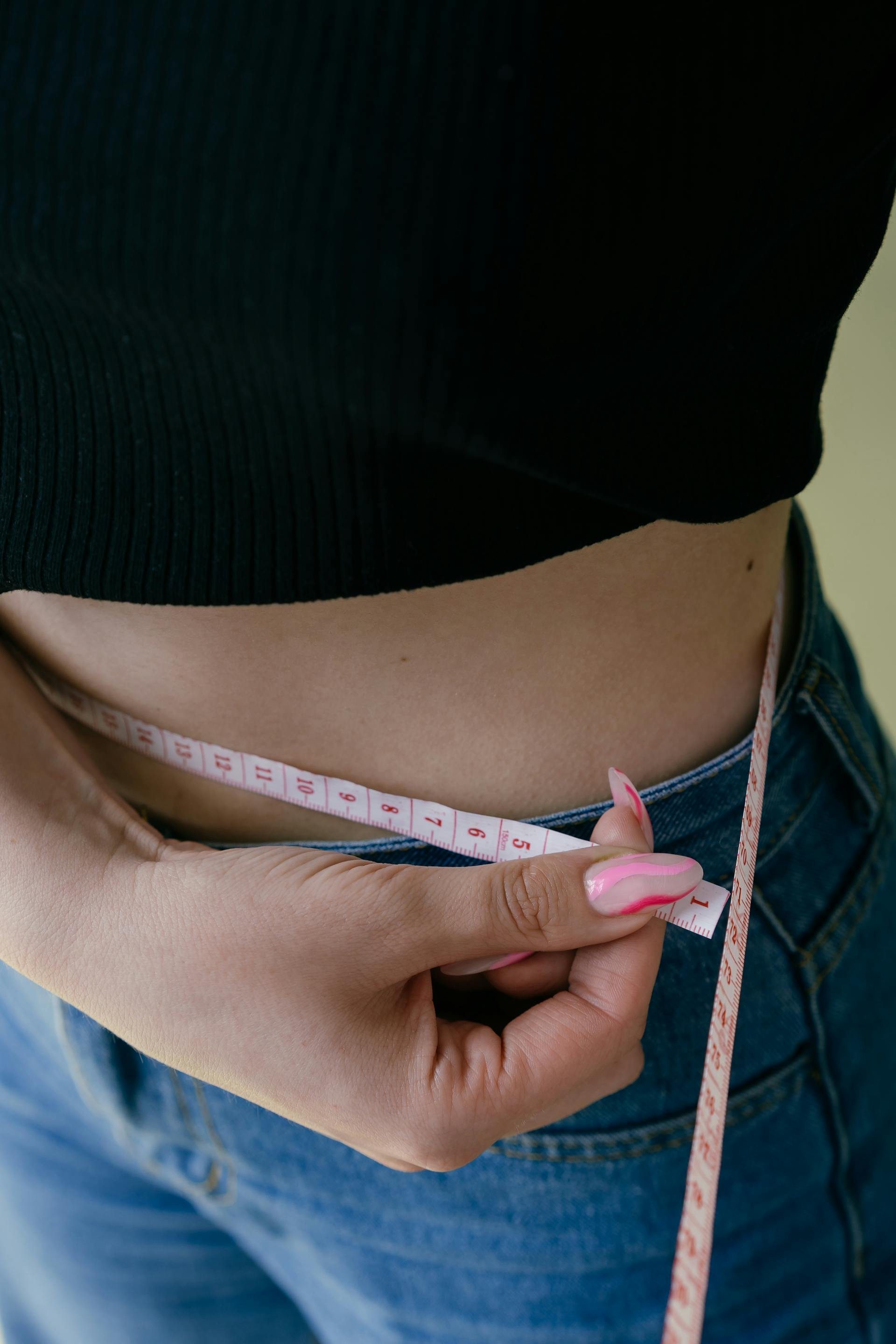
"Big-Boned" Is Real (Sort Of): What Frame Size Actually Changes
The Oldest Excuse in the Book
"I'm not fat, I'm just big-boned."
It's been said in school cafeterias, doctors' offices and family dinners for generations. And here's the twist: it's partly true. Frame size is real. People really do have different-sized skeletons, and it really does change what a healthy weight looks like for them.
The problem is the size of the effect. Being big-boned explains a few pounds of bone and a modest bump in muscle. It does not explain 30, 50 or 80 extra pounds. Here's what the numbers actually say, and how to tell whether your frame is the reason, or just the excuse.
How Much Do Your Bones Actually Weigh?
Less than most people think.
According to the International Commission on Radiological Protection's reference values (the standard figures scientists use for the "average" human body), a typical adult skeleton weighs about:
- 10.5 kg (23 lb) for men, around 14% of body weight
- 7.8 kg (17 lb) for women, around 13% of body weight
And that figure includes the bone marrow, cartilage and water inside the bones. The hard mineral part, the bit people picture when they say "bones," is only about half of that.
Now let's be generous. Say your skeleton is 20% heavier than average. That's a very big frame. The extra weight is:
- About 2 kg (4–5 lb) for a man
- About 1.5 kg (3–4 lb) for a woman
So even a genuinely big-boned person carries only a few extra pounds of bone. That's real, but it's the weight of a large bag of sugar, not a whole extra size of clothing.
Where "Big-Boned" Does Make a Difference: Muscle
Bones aren't the whole story. A bigger skeleton has wider shoulders, wider hips and more room for muscle to attach. So people with larger frames tend to carry more lean mass (muscle, organs and bone) as well.
This is exactly what researchers have found. In a study of 437 adults published in the American Journal of Public Health, every frame-size measure tested was linked to fat-free mass, even after accounting for height.
But here's the key finding from the same study: wrist breadth had no link to body fat at all. A bigger wrist means a bigger frame and more lean tissue. It doesn't mean more fat, and it doesn't explain fat. That's one reason our calculator uses your wrist, not your elbow or hips, to measure frame size.
How Much Does Frame Size Change Your Healthy Weight?
About 10%. That's the standard adjustment, and it's what our calculator uses: a small frame lowers your ideal weight range by 10%, and a large frame raises it by 10%. (Our Frame Size Explained guide shows how to measure your wrist.)
Here's what that looks like for a woman who is 5 ft 5 in (165 cm):
| Frame size | Healthy weight range |
|---|---|
| Small | ~100–134 lb |
| Medium | ~111–149 lb |
| Large | ~122–164 lb |
Either way, having a large frame moves the top of her healthy range up by about 15 pounds. That's a meaningful difference, and it's why a large-framed woman at 160 lb may be perfectly healthy while a small-framed woman of the same height at 160 lb is carrying a lot of extra fat.
Where "Big-Boned" Stops Working
Now look at that table again. Even with a large frame, the top of the healthy range for a 5 ft 5 in woman is about 164 lb. That works out to a BMI of about 27.
Obesity starts at a BMI of 30, which for her height is 180 lb.
So a large frame can explain why someone sits in the upper part of the healthy range, or just over it. It can never explain obesity. If she weighs 200 lb, being big-boned accounts for, at most, about 15 of those pounds. The other 36 lb above even the large-frame limit aren't bone.
The same is true at any height, because a 10% adjustment never stretches a healthy BMI of 24.9 past about 27.4.
Wait, Don't Heavier People Have Bigger Bones?
They do, a little, but it's the weight that causes the bones, not the other way around.
Bone responds to load. Carry more weight around, and your bones get slightly thicker and denser to cope. Researchers at North Carolina State University studied the femurs (thigh bones) of 121 men and found that the heavier a person was, the wider their femur shaft. They think the extra load and the different way heavier people walk make the bone more robust.
So if a person with obesity has slightly bigger bones than they did at a lower weight, the bones grew to carry the weight. They aren't why the weight is there. And as we covered above, the bone itself still only weighs a few pounds.
The Real Reasons Someone "Looks Heavier Than They Are"
There are legitimate reasons why two people of the same height and weight can look completely different, or why BMI can label a fit person as overweight:
- Muscle. Strength athletes and people who do a lot of physical work often have a high BMI with little fat. This is the most common case where "big-boned" is actually "muscular." (See BMI Is Broken for where BMI goes wrong.)
- Frame size. As above, worth about 10% of healthy weight.
- Where fat sits. Two people with the same weight can carry fat very differently. Fat around the belly is the most dangerous kind, whatever your frame.
The first two are real and worth knowing. But notice that none of them involve fat. If the extra weight is fat, frame size doesn't excuse it.
How to Tell If It's Your Frame or Your Fat
You don't have to guess. These checks are frame-neutral: they work whether you're big-boned or not.
1. Measure your wrist
Wrap a tape measure around your wrist just above the wrist bone. For a woman who's 5 ft 5 in, a wrist larger than about 6.4 inches (16.3 cm) counts as a large frame. Smaller than about 5.9 inches (15 cm) is small. Plug your measurements into our calculator and it does this for you, then shows your frame-adjusted healthy weight.
2. Measure your waist
This is the big one. Your waist should be less than half your height, a waist-to-height ratio under 0.5. A large frame doesn't give you a bigger belly; fat does. If your waist is more than half your height, it's not your bones. (Read why in Waist-to-Height Ratio Predicts Heart Failure.)
3. Check your body fat percentage
A body fat test tells you directly how much of your weight is fat. A smart scale will give you a rough number for free; a DEXA scan is the most accurate. (See Bioelectrical Impedance vs DEXA for how accurate each one is.) A big-boned person at a healthy weight will still have a healthy body fat level.
4. Pinch test your belly
Crude, but honest. Muscle and bone don't pinch. If you can grab more than an inch of fat around your middle, frame size isn't the explanation.
Why the Excuse Matters
This isn't about shaming anyone. People often reach for "big-boned" because weight is a painful subject, and a simple explanation feels kinder than the truth.
But believing it has a cost. If you think your extra weight is bone, you won't do anything about it, and fat, especially visceral fat, drives up the risk of diabetes, heart disease and other problems regardless of your skeleton. You can have a large frame and too much body fat at the same time. Many people do.
The good news: if you are big-boned, your healthy target really is higher than the standard charts say. That makes it a more realistic goal, not a reason to skip having one.
The No-BS Takeaway
"Big-boned" is real, but small. A genuinely large skeleton weighs only a few pounds more than average, and a large frame adds about 10% (roughly 15 lb for an average-height woman) to your healthy weight range, mostly because bigger frames carry more muscle.
That's enough to explain sitting at the top of the healthy range. It's never enough to explain obesity. Measure your wrist to know your frame, then measure your waist to know your fat. If your waist is more than half your height, it isn't your bones.
Scientific References
- International Commission on Radiological Protection. Basic anatomical and physiological data for use in radiological protection: reference values. ICRP Publication 89. Annals of the ICRP. 2002;32(3–4).
- Himes JH, Bouchard C. Do the new Metropolitan Life Insurance weight-height tables correctly assess body frame and body fat relationships? American Journal of Public Health. 1985;75(9):1076–1079.
- Frisancho AR, Flegel PN. Elbow breadth as a measure of frame size for US males and females. American Journal of Clinical Nutrition. 1983;37(2):311–314.
- Metropolitan Life Insurance Company. 1983 Metropolitan height and weight tables. Statistical Bulletin. 1983;64(1):2–9.
- Agostini GM, Ross AH. The effect of weight on the femur: a cross-sectional analysis. Journal of Forensic Sciences. 2011;56(2):339–343.
- Grant JP. Handbook of Total Parenteral Nutrition. Philadelphia: W.B. Saunders; 1980.
- National Institutes of Health. Clinical Guidelines on the Identification, Evaluation, and Treatment of Overweight and Obesity in Adults. NIH Publication No. 98-4083. 1998.