
You Didn't Gain 4 Pounds of Fat Overnight: Daily Weight Fluctuations Explained
The Scale Just Jumped 4 Pounds. Relax.
You were good all week. Then Monday morning you step on the scale and it says you're up 4 pounds. Panic. Did the weekend undo everything? Should you skip breakfast, double your cardio, give up?
None of the above. You did not gain 4 pounds of fat overnight. It's almost physically impossible.
A pound of body fat stores roughly 3,500 calories. To gain 4 pounds of actual fat in a day, you'd need to eat about 14,000 calories more than you burned. That's around six large pizzas on top of your normal food. A big weekend doesn't come close.
What you're seeing is mostly water, plus the food and drink still working its way through your system. Your weight can swing by several pounds from one day to the next without any change in body fat at all. Once you understand why, the scale stops being scary and starts being useful.
What Your Scale Is Actually Weighing
Your scale doesn't measure fat. It measures everything: bones, muscle, organs, fat, blood, the water in and around your cells, the food in your stomach, and whatever is waiting in your bladder and bowels.
Fat changes slowly. Almost everything else on that list can change by the hour. So a day-to-day jump almost always comes from the fast-moving stuff:
| What changed | Why the scale moves | How long it lasts |
|---|---|---|
| More carbs than usual | Stored carbs (glycogen) hold lots of water | A few days |
| A salty meal | Your body holds water to balance sodium | A day or two |
| Food and drink still in your system | It has weight until it's digested and passed | Hours to a day or two |
| A hard or new workout | Muscles hold water while they repair | Several days |
| Menstrual cycle | Hormone shifts cause fluid retention | Days, every month |
| Stress and poor sleep | Can increase fluid retention | Varies |
| Alcohol | Dehydrates, then you rehydrate (often with salty food) | A day or two |
The Carb Effect: Why Pasta Night "Adds" 2 Pounds
This is the biggest driver of overnight jumps, and it's completely harmless.
Your body stores carbohydrates in your muscles and liver as glycogen, and glycogen doesn't travel light. A 2023 review in the journal Nutrients found that each gram of muscle glycogen is stored with 3–4 grams of water. Eat a big carb-heavy meal and your body tops up those stores, pulling in water along with them.
How much can that add? When athletes deliberately "carb-load" before an event, their body weight typically goes up by about 1–1.5 kg (2–3 lb), almost entirely from water, according to the same review.
It works in reverse too. This is why low-carb diets produce such dramatic results in the first week: much of that early "weight loss" is glycogen and water, not fat. It's also why the weight seems to come back the moment you eat bread again.
The Weekend Effect Is Real (and Normal)
If Mondays are always your heaviest day, you're not imagining it.
A 2020 study in PLOS ONE tracked 1,421 adults in a European weight-loss maintenance program, using smart scales over 18 months. Their weight followed a clear weekly rhythm: highest on Monday, lowest on Friday, with an average swing of about 0.35% of body weight. For a 200-pound person, that's a regular weekly swing of around 0.7 pounds, before counting the bigger day-to-day noise.
An earlier study in Obesity Facts found the same pattern, with an important twist. The people who lost or maintained weight over time still had weekend bumps. What set them apart was that they brought their weight back down during the week. A heavier Monday is normal. What matters is whether the trend line keeps moving the right way.
The same PLOS ONE study also measured the holidays. Over Christmas, participants gained an average of 1.35% of their body weight, and by March many still hadn't fully lost it. Unlike a weekend blip, that one partly stuck. (We broke down the weekend math in Your Liver Burns Alcohol First.)
Salt, Workouts, Hormones and Stress
Salt. A salty restaurant meal or takeout can make you hold extra water for a day or so. Your body keeps sodium and water in balance, so more sodium can briefly mean more water on the scale. It sorts itself out within a couple of days.
Workouts. A tough leg day or a new exercise routine causes tiny amounts of muscle damage. Your muscles hold extra water while they repair, which can mask fat loss for several days. That's one reason people sometimes "gain" weight in the first couple of weeks of a new program.
Menstrual cycle. Hormone changes across the cycle cause regular fluid retention for many women. Research from a year-long Canadian study published in Obstetrics and Gynecology International found fluid retention peaks around the first day of the period and is lowest in the first half of the cycle. If you menstruate, compare your weight at the same point in each cycle, not week to week.
Stress and sleep. Chronic stress and short sleep can increase water retention, and they make hunger harder to manage too. (See Cortisol Belly Is Real.)
Your Smart Scale's Body Fat Number Swings Too
If you use a smart scale that shows body fat percentage, know that its reading is also affected by water. These scales send a small electrical current through your body, and how well it travels depends on how hydrated you are. Your body fat reading can jump around by several points between morning and evening, or after a workout or a big drink, even though your fat hasn't changed. As we explained in Bioelectrical Impedance vs. DEXA, the trend matters far more than any single reading.
How to Weigh Yourself Without Losing Your Mind
The fix isn't to ignore the scale. It's to use it properly.
- Weigh at the same time, under the same conditions. First thing in the morning, after using the bathroom, before eating or drinking, in the same clothes (or none).
- Use the same scale on a hard, flat floor. Moving it around or using a different one adds extra noise.
- Track the trend, not the day. Use the weekly average, or an app that shows a smoothed trend line. Compare this week's average with last week's.
- Compare like with like. Compare Monday to Monday, not Monday to Friday. If you menstruate, compare the same point in your cycle.
- Give it three to four weeks before deciding something isn't working. If the trend has really stopped, read Why Your Weight Loss Stalled.
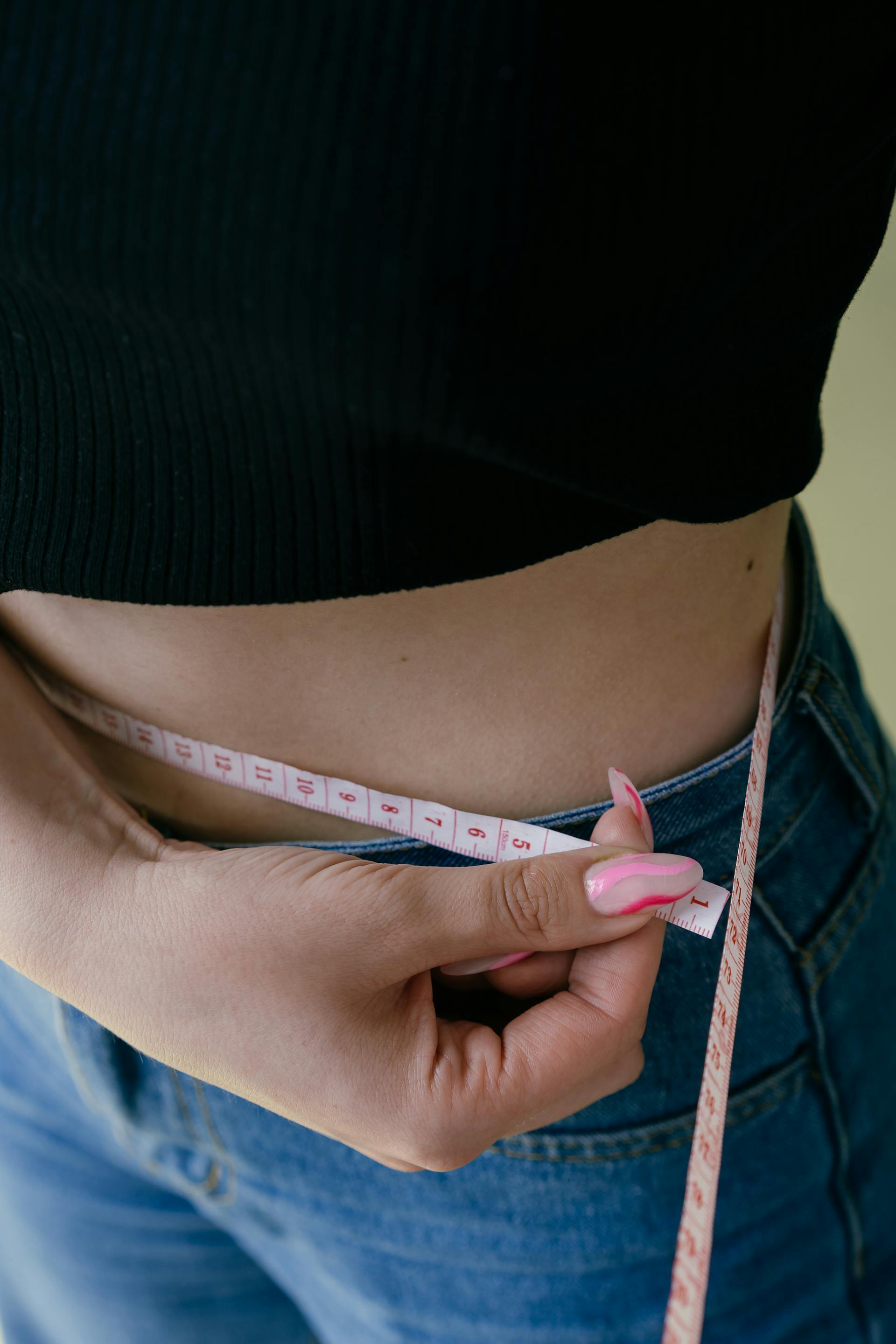
- Use other measures too. Your waist measurement, how your clothes fit and progress photos all help. Our calculator uses your waist measurement for the waist-to-height ratio, one of the best predictors of health risk.
Daily or Weekly?
Both can work. Research suggests regular weighing helps: in a 2015 study in the Journal of the Academy of Nutrition and Dietetics, people in a weight-loss program who weighed themselves every day lost about 6 kg (13 lb) more over six months than those who weighed less often, and they adopted more healthy habits. That study compared people who chose how often to weigh, so it shows a strong link rather than proof that daily weighing causes the extra loss.
But daily weighing only helps if you can treat each number as one data point. If a bad reading wrecks your mood or makes you skip meals, weigh once a week instead, at the same time on the same day. Friday morning is usually the most flattering; Monday is the most honest about your weekend.
Pro tip: When the scale jumps, ask "What did I eat or do in the last 48 hours?" before you ask "Did I gain fat?" Salt, carbs, a hard workout, a late meal or poor sleep explains most surprises.
The No-BS Takeaway
Your weight can swing several pounds from day to day, and almost none of it is fat. Gaining a pound of fat takes roughly 3,500 extra calories, so overnight jumps are water, glycogen and food still in your system. Carbs, salt, hard workouts, your menstrual cycle, stress and the weekend all move the scale without changing your body fat.
Weigh yourself the same way every time, watch the weekly trend instead of the daily number, and judge your progress over weeks, not mornings. The scale is a useful tool, as long as you know what it's actually telling you.
Scientific References
- Turicchi J, et al. Weekly, seasonal and holiday body weight fluctuation patterns among individuals engaged in a European multi-centre behavioural weight loss maintenance intervention. PLOS ONE. 2020;15(4):e0232152.
- Orsama AL, et al. Weight rhythms: weight increases during weekends and decreases during weekdays. Obesity Facts. 2014;7(1):36–47.
- Muscle glycogen assessment and relationship with body hydration status: a narrative review. Nutrients. 2023;15(1):155.
- White CP, Hitchcock CL, et al. Fluid retention over the menstrual cycle: 1-year data from the Prospective Ovulation Cohort. Obstetrics and Gynecology International. 2011;2011:138451.
- Steinberg DM, Bennett GG, Askew S, Tate DF. Weighing every day matters: daily weighing improves weight loss and adoption of weight control behaviors. Journal of the Academy of Nutrition and Dietetics. 2015;115(4):511–518.

.jpg)