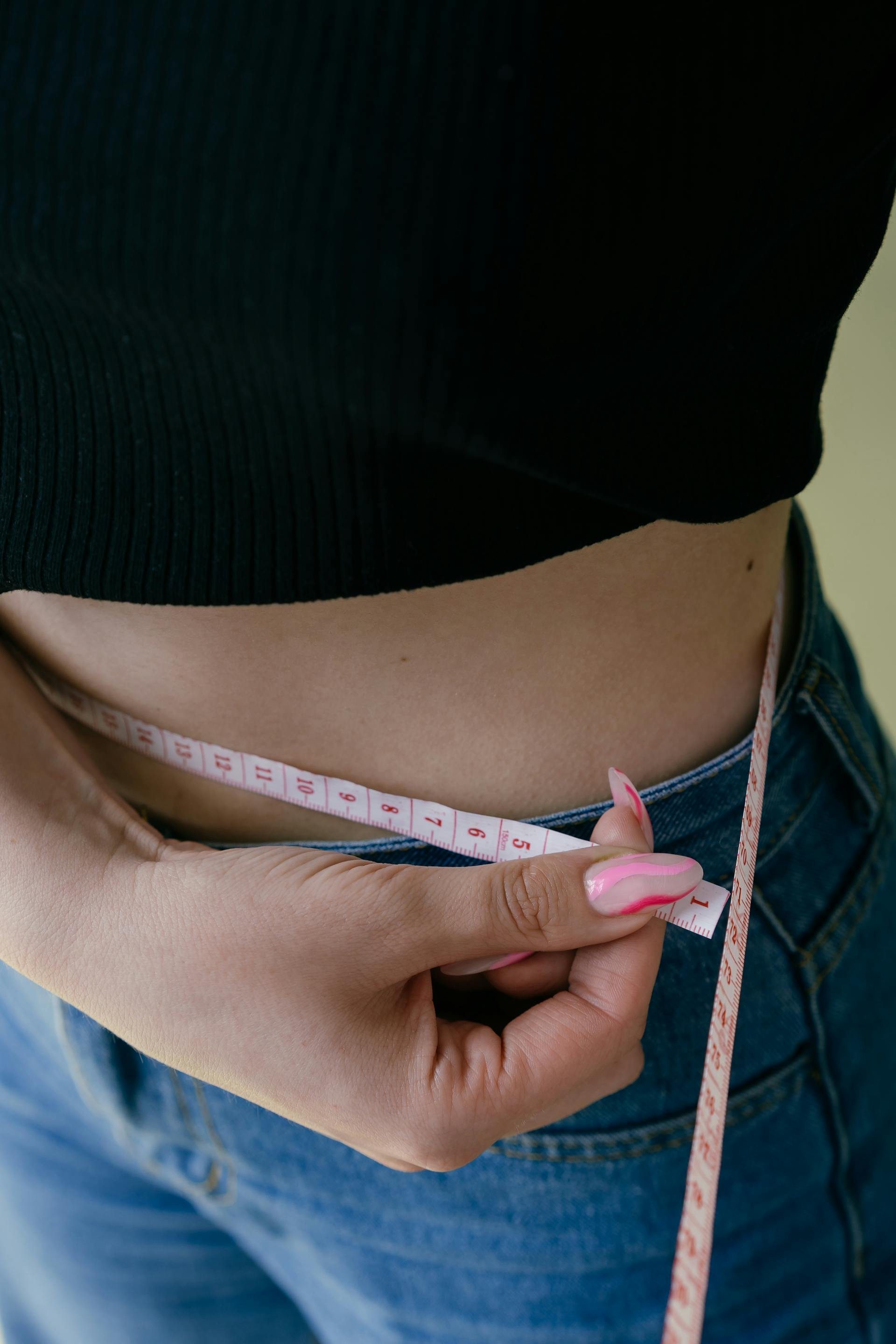
Your Calorie Calculator Is Guessing: How Accurate Is TDEE, Really?
That Calorie Number Is an Estimate, Not a Measurement
You type in your height, weight, age and activity level. A calculator, including ours, spits out a precise-looking number: 2,304 calories a day to maintain your weight. Eat 500 less and you'll lose about a pound a week.
It looks exact. It isn't.
No calculator can measure how many calories you burn. It can only make an educated guess based on averages from people who are roughly your size, age and sex. For most people, that guess lands in the right neighborhood. For some, it's off by hundreds of calories a day, which is enough to turn a planned deficit into no deficit at all.
That doesn't make calculators useless. It means you should treat your number as a starting point, then use your own results to correct it. Here's how accurate these numbers really are, where the errors come from, and how to find your real number in a few weeks.
How Your Calorie Number Is Calculated
Every TDEE (total daily energy expenditure) calculator works in two steps.
Step 1: Estimate your resting burn (BMR). This is what your body burns just to stay alive. Our calculator uses the Mifflin-St Jeor equation, the formula most dietitians use:
- Men: (10 × weight in kg) + (6.25 × height in cm) − (5 × age) + 5
- Women: (10 × weight in kg) + (6.25 × height in cm) − (5 × age) − 161
Step 2: Multiply by an activity factor to account for everything else you do in a day:
| Activity level | Multiplier |
|---|---|
| Sedentary (little or no exercise) | × 1.2 |
| Lightly active (exercise 1–3 days a week) | × 1.375 |
| Moderately active (3–5 days a week) | × 1.55 |
| Very active (6–7 days a week) | × 1.725 |
| Super active (athlete level) | × 1.9 |
Error #1: The BMR Formula Is Good, Not Perfect
Mifflin-St Jeor is the best of the common formulas. A systematic review in the Journal of the American Dietetic Association compared it with the older Harris-Benedict equation and two others against measured metabolism, and Mifflin-St Jeor came out on top.
But "best" still isn't exact. In that review:
- It predicted resting metabolism within 10% for about 82% of people without obesity.
- For people with obesity, that dropped to about 70%.
- That means roughly 1 in 5 to 1 in 3 people are off by more than 10%, and the authors warned that meaningful errors happen at the individual level.
They also noted that older adults and many ethnic groups were underrepresented in the studies used to build and test the formula, so the error could be bigger for them.
Why can't a formula nail it? Because two people with the same height, weight, age and sex can have very different bodies. One may carry more muscle, which burns more at rest; the other more fat. The formula only knows your total weight.
Error #2: The Activity Multiplier Is the Real Wild Card
The BMR formula is the smaller problem. The bigger one is that activity multiplier, because you pick it yourself, and it's surprisingly hard to pick correctly.
Here's what's wrong with it:
The categories are based on workouts, but most of your movement isn't exercise. "Moderately active" is defined by how many days you exercise. But the calories you burn walking, standing, fidgeting and doing chores (NEAT) can differ by hundreds of calories a day between people with the same workout schedule. A nurse who never sets foot in a gym may burn more than an office worker who runs three times a week.
People overestimate how active they are. In a classic study in the New England Journal of Medicine, people who believed they couldn't lose weight over-reported their exercise by 51%. It's human nature: a hard workout feels like it burned more than it did.
Exercise doesn't add calories in a straight line. A 2016 study in Current Biology measured the daily energy use of more than 300 adults with the gold-standard doubly labeled water method. Moderately active people burned only about 200 more calories a day than the most sedentary people, and beyond moderate activity, burn stopped rising. The body seems to compensate for extra exercise by cutting energy use elsewhere. Simple multipliers assume more activity always means proportionally more calories.
Researchers find big individual errors too. A 2024 study in Scientific Reports tested 10 different equations for predicting total daily calorie burn against doubly labeled water in 56 adults. Most of them underestimated what people actually burned, and even the best ones had sizable errors for individuals.
What the Errors Look Like in Real Life
Let's run an example through our own calculator: a 40-year-old woman, 5 ft 5 in (165 cm), 180 lb (82 kg).
Her estimated BMR is about 1,490 calories a day. Here's how her daily target changes depending on the activity level she picks:
| If she picks… | Estimated maintenance | "Lose 1 lb/week" target |
|---|---|---|
| Sedentary | ~1,780 | ~1,280 |
| Lightly active | ~2,040 | ~1,540 |
| Moderately active | ~2,300 | ~1,800 |
| Very active | ~2,570 | ~2,070 |
Now stack the BMR error on top. If her real BMR is 10% higher or lower than the formula says, that shifts her moderately active estimate by another ~230 calories either way.
Put together, her real maintenance could plausibly be anywhere from about 1,600 to 2,500 calories. The calculator gives her a sensible middle. Only her own results can tell her where she actually sits.
Don't Trust Your Fitness Tracker's Calorie Count Either
If your watch says you burned 2,800 calories today, take it with a big grain of salt.
In a Stanford study published in the Journal of Personalized Medicine, researchers tested seven popular wrist trackers in 60 volunteers. Six of the seven measured heart rate within 5%, which is genuinely good. But for calories burned, even the most accurate device was off by 27% on average, and the worst was off by 93%.
Trackers are useful for steps and for spotting trends (did you move more this week than last?). They are not reliable enough to tell you how much more you can eat.
How to Find Your Real Number: The Two-Week Calibration
Here's the good news: you don't need a lab. Your bathroom scale and your food log, used together, will tell you your real maintenance calories more accurately than any formula. It takes a few weeks.
Step 1: Start with the calculator
Use our calculator to get a starting estimate. When in doubt about your activity level, pick the lower one. It's far more common to overestimate activity than underestimate it.
Step 2: Track your food honestly for at least two to three weeks
This only works if your tracking is accurate. Weigh food where you can, and log everything: cooking oil, sauces, drinks, snacks and bites. (See Your Liver Burns Alcohol First for why drinks count.) Eat at a consistent level rather than swinging wildly from day to day.
Step 3: Weigh yourself and use weekly averages
Weigh yourself first thing in the morning, after the bathroom, at least three or four times a week. Compare weekly averages, not individual days, because water can swing the scale by several pounds overnight. (We explain why in You Didn't Gain 4 Pounds of Fat Overnight.)
Ignore the first week of a new diet. Cutting calories and carbs drops water fast, which makes week one look far better than your true rate of fat loss.
Step 4: Do the math
A pound of body fat holds roughly 3,500 calories. So:
Your real maintenance ≈ your average daily intake + (pounds lost per week × 500)
For example: you averaged 1,900 calories a day and lost an average of 0.5 lb a week over weeks two to four.
1,900 + (0.5 × 500) = about 2,150 calories a day at maintenance.
If your weight didn't change at all, your average intake is your maintenance. If you gained weight, subtract instead of adding.
Step 5: Adjust and repeat
Now set your target from your real number. To lose about a pound a week, eat roughly 500 below it. Recheck every four to six weeks, and after every 10–15 pounds lost, because a smaller body burns less. (See Why Your Weight Loss Stalled for why your needs fall as you lose.)
The 3,500-Calorie Rule Has Limits, Too
To be fair to the scale method, it has an imperfection of its own. The "3,500 calories per pound" rule is a rough guide, not a law of physics. Researchers at the NIH have shown it overstates long-term weight loss, because your calorie needs fall as you get smaller. Some of what you lose is also water and muscle rather than pure fat.
Over a few weeks, though, it's close enough to calibrate your intake. What matters is the direction and size of the correction, not decimal-point precision.
The No-BS Takeaway
Your calorie calculator is making an educated guess. The Mifflin-St Jeor formula is the best one available, but it's off by more than 10% for roughly one in five people without obesity and closer to one in three people with obesity. The activity multiplier adds even more uncertainty, and fitness trackers can be off by a quarter or more.
So use the calculator to get started, pick the lower activity level if you're unsure, then let your own results take over. Track honestly for a few weeks, compare your average intake with your weekly weight trend, and you'll know your real number. That's worth more than any formula.
Scientific References
- Mifflin MD, St Jeor ST, Hill LA, Scott BJ, Daugherty SA, Koh YO. A new predictive equation for resting energy expenditure in healthy individuals. American Journal of Clinical Nutrition. 1990;51(2):241–247.
- Frankenfield D, Roth-Yousey L, Compher C. Comparison of predictive equations for resting metabolic rate in healthy nonobese and obese adults: a systematic review. Journal of the American Dietetic Association. 2005;105(5):775–789.
- Lichtman SW, Pisarska K, Berman ER, et al. Discrepancy between self-reported and actual caloric intake and exercise in obese subjects. New England Journal of Medicine. 1992;327(27):1893–1898.
- Pontzer H, Durazo-Arvizu R, Dugas LR, et al. Constrained total energy expenditure and metabolic adaptation to physical activity in adult humans. Current Biology. 2016;26(3):410–417.
- Validity of predictive equations for total energy expenditure against doubly labeled water. Scientific Reports. 2024.
- Westerterp KR. Exercise, energy expenditure and energy balance, as measured with doubly labelled water. Proceedings of the Nutrition Society. 2018;77(1):4–10.
- Shcherbina A, Mattsson CM, Waggott D, et al. Accuracy in wrist-worn, sensor-based measurements of heart rate and energy expenditure in a diverse cohort. Journal of Personalized Medicine. 2017;7(2):3.
- Hall KD, Sacks G, Chandramohan D, et al. Quantification of the effect of energy imbalance on bodyweight. The Lancet. 2011;378(9793):826–837.